How Veterinary-Grade Disinfectants Protect Animal Health

Why Hygiene Is a Cornerstone of Animal Health
When people think about animal health, they often focus on nutrition, vaccination, and medical treatment. What is less visible, but equally important, is the role of environmental hygiene.
Pathogens do not only spread through direct contact between animals. They persist on floors, equipment, bedding, footwear, transport crates, and even in the air.
How Veterinary-Grade Disinfectants Protect Animal Health
Veterinary-grade disinfectants are designed to interrupt this cycle. They reduce pathogen load in animal environments, limit cross-contamination, and protect both animals and the people who care for them.
In clinical settings, kennels, shelters, farms, and even home environments with immunocompromised pets, disinfection is not optional. It is a preventive health measure.
What Makes a Disinfectant “Veterinary-Grade”
Not all disinfectants are created equal. Household cleaners may remove visible dirt, but they are rarely tested against the broad spectrum of viruses, bacteria, fungi, and spores that animals can encounter.
Veterinary-grade disinfectants are formulated and tested specifically for animal environments.
They are assessed for effectiveness against pathogens such as parvovirus, distemper virus, salmonella, E. coli, and fungal organisms, while also being safe when used correctly around animals.
Key characteristics include:
- Broad-spectrum antimicrobial activity
- Proven efficacy at specific dilution rates
- Stability in the presence of organic matter
- Suitability for repeated use in animal facilities
These properties make veterinary disinfectants essential in both professional and home animal care settings.
How Disinfectants Break the Chain of Infection
Disease transmission often follows predictable patterns. An infected animal sheds pathogens into the environment. Those pathogens survive on surfaces. Another animal encounters the contaminated area and becomes infected.
Disinfectants work by disrupting this chain. When used consistently, they reduce the number of viable pathogens to a level where infection becomes unlikely.
This is especially important in high-risk environments such as:
- Veterinary clinics and treatment rooms
- Kennels, boarding facilities, and shelters
- Breeding facilities and farms
- Grooming salons and transport vehicles
- Homes with multiple pets or recovering animals
In these settings, surface hygiene directly influences health outcomes.
___________________________________________________
F10 SC Veterinary Disinfectant: Broad-Spectrum Protection
One of the most widely recognised veterinary disinfectants is F10 SC Veterinary Disinfectant. It is valued for its broad antimicrobial activity and versatility across different environments.
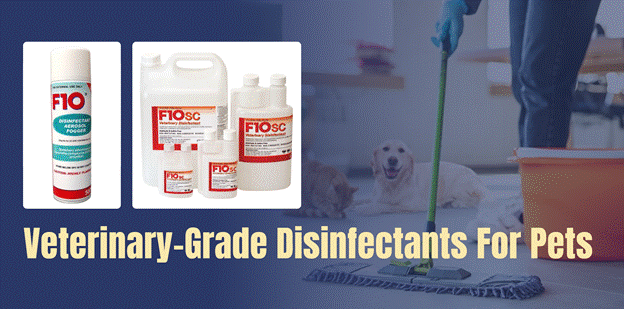
Used correctly, F10 SC Veterinary Disinfectant can be applied to floors, walls, equipment, cages, and transport crates. Its formulation allows it to remain effective even in the presence of organic matter, which is critical in animal environments where perfect pre-cleaning is not always possible.
Many professionals choose F10 SC because it balances efficacy with safety, making it suitable for routine use without excessive harshness.
Airborne Pathogens and Fogging Solutions
Surface cleaning alone does not address airborne contamination. In enclosed spaces, pathogens can remain suspended in the air or settle on surfaces after cleaning.
This is where fogging systems become valuable. Products like F10 SC Aerosol Fogger 500ml allow disinfectant particles to disperse evenly throughout a space, reaching areas that manual wiping may miss.
Fogging is often used in:
- Isolation rooms
- Kennels after disease outbreaks
- Transport vehicles
- Storage rooms and enclosed animal housing
By treating both air and surfaces, fogging adds an extra layer of biosecurity in high-risk situations.
___________________________________________________
Virkon S: Rapid Action in High-Risk Environments
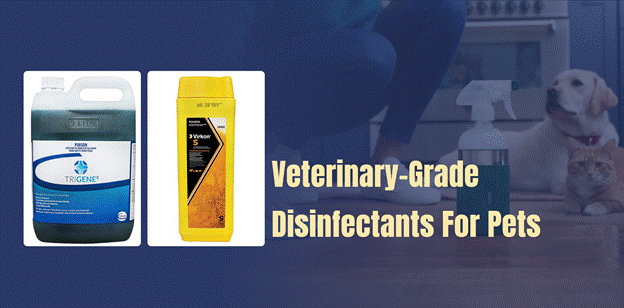
Some situations demand fast, aggressive pathogen control. Virkon S Disinfectant is often chosen in outbreak management and high-traffic facilities due to its rapid action against a wide range of microorganisms.
Virkon S Disinfectant is commonly used in farms, shelters, and emergency response scenarios where disease pressure is high. Its visual colour change during dilution also helps staff confirm correct preparation, reducing the risk of ineffective cleaning due to improper mixing.
This reliability makes it a trusted option when consistency across teams is critical.
___________________________________________________
Trigene II: Multi-Purpose Disinfection and Cleaning
In some environments, a disinfectant that also supports cleaning efficiency is preferred. Trigene II Disinfectant Concentrate combines cleaning and disinfecting properties, reducing the need for multiple products.
Trigene II Disinfectant Concentrate is often used where odour control, organic waste breakdown, and microbial reduction are required simultaneously. This makes it particularly useful in kennels, grooming areas, and waste handling zones.
Its concentrated format also allows for flexible dilution depending on the level of contamination and the task at hand.
___________________________________________________
Choosing the Right Disinfectant for the Environment
No single disinfectant suits every situation. Selection should be based on the environment, level of contamination, and specific risks present.
Details to consider:
- Routine cleaning may suit broad-spectrum disinfectants like F10 SC
- Outbreak control may require fast-acting solutions such as Virkon S
- Enclosed or airborne risk areas benefit from fogging systems
- Multi-use spaces may prefer combined cleaning and disinfecting products like Trigene II
Understanding these differences helps ensure disinfectants are used effectively rather than as a one-size-fits-all solution.
Why Disinfection Is Preventive, Not Reactive
A common mistake is treating disinfection as a response to visible illness. In reality, effective disinfection is most valuable before disease appears. Pathogens often spread silently long before symptoms become obvious.
Consistent use of veterinary-grade disinfectants reduces environmental contamination, lowers infection pressure, and supports overall animal wellbeing. This proactive approach protects vulnerable animals, reduces treatment costs, and supports biosecurity across facilities.
Final Thoughts
Veterinary-grade disinfectants play a quiet but powerful role in protecting animal health. By controlling pathogens in the environment, they reduce disease transmission, support recovery, and safeguard both animals and humans.
Products such as F10 SC Veterinary Disinfectant, F10 SC Aerosol Fogger, Virkon S Disinfectant, and Trigene II Disinfectant Concentrate are not interchangeable cleaners. They are targeted tools designed for the realities of animal care.
Investing in the right disinfectant strategy is an investment in long-term health, safety, and peace of mind.